


Understanding ACU Token: Acurast Redefines Computing Power with Billions of Smartphones



- 核心观点:Acurast利用闲置手机构建去中心化计算网络。
- 关键要素:
- 超15.8万设备接入测试网,提供可验证算力。
- 代币ACU驱动生态,近70%代币分配给社区。
- 已完成1100万美元融资,获Gavin Wood等投资。
- 市场影响:挑战传统云服务,推动去中心化计算发展。
- 时效性标注:长期影响。
Acurast (ACU) is revolutionizing global computing by leveraging billions of idle smartphones instead of relying on traditional centralized data centers. Its verifiable, scalable, and confidential computing network allows users to run secure applications and AI workloads at scale without sacrificing speed or privacy.
With over 158,000 computing units already connected to its incentivized testnet, Acurast has established a decentralized, verifiable computing network that supports mission-critical tasks with stringent requirements for high security and AI capabilities.
Acurast is more than just another DePIN protocol; it transforms everyday devices into a global computing network, tightly connecting developers, device providers, and end-users through the ACU token economy. From staking and governance participation to rewards for contributing computational resources, the platform champions a community-centric, decentralized ethos and is redefining the future of computing.
The ACU token is now officially listed in the XT Pre-Market ACU zone—join now and get involved!

Quick Summary
- Acurast (ACU) transforms billions of idle smartphones into a decentralized, verifiable computing network.
- Users can earn ACU tokens by contributing computing power, staking, and participating in governance.
- The network supports secure, scalable applications and AI tasks without the need for traditional data centers.
- A community-centric ACU token economy drives the growth of the decentralized computing ecosystem.
What is Acurast (ACU)?
Acurast redefines computing by leveraging billions of smartphones—no data centers required. The network is verifiable, scalable, and privacy-preserving, enabling users to run secure applications at scale on decentralized infrastructure without sacrificing speed or privacy.
Acurast's incentivized testnet has connected over 158,139+ computing units, making it one of the most decentralized verifiable computing networks available today, already handling critical computing tasks for high-security and AI scenarios.
This is not just another DePIN model; it's a transformative force reshaping global computing.
It is this innovative capability that has attracted significant investor attention. On November 13, Acurast announced the completion of an $11 million funding round, with investors including Gavin Wood, co-founder of Ethereum and Polkadot, Michael van de Poppe, founder of MN Capital, and Ogle, founder of GlueNet, among others.
How ACU Works: Core Mechanism Analysis
Core Infrastructure: Computing Power → Decentralization → DePIN
At the heart of Acurast is "computing power"—the computational resources used to run applications, AI models, or process data.
Unlike traditional cloud services that rely on large, centralized data centers, Acurast uses idle smartphones as computing nodes, turning each device into a micro data center, reducing reliance on centralization and avoiding single points of failure.
This model falls under DePIN (Decentralized Physical Infrastructure Networks), where infrastructure is provided by users rather than institutions, creating an open-source, community-driven network of computing resources.
How Phones Join the Network|Reliability Mechanism & Reward Model
Any smartphone can become a Processor node for Acurast.
Devices run tasks in the background via a Trusted Execution Environment (TEE), ensuring the execution process is secure and does not leak privacy.
The system evaluates device performance based on a Benchmark score, including CPU, memory, storage, etc. Higher scores grant access to more tasks and higher rewards.
Devices must also send regular Heartbeat signals (approximately every 30 minutes). If no signal is sent for an extended period, the device is considered offline, and its tasks and rewards will decrease.
Token Mechanism, Staking, and Incentive Model
Acurast's economic system is powered by its native token, ACU (cACU is the test token before mainnet launch). Contributing computing power and running nodes earns cACU, which can be converted to ACU after the mainnet and Token Generation Event (TGE) launch.
Users can stake ACU to enhance node reputation. Devices that run stably receive additional rewards, while unstable nodes may face penalties, including reduced staked amounts.
After the mainnet launch, ACU will be used for:
- Paying for computing power
- Node staking and rewards
- Governance voting
- Rewarding computing power contributors
ACU Tokenomics: Value, Utility, and Incentive Mechanisms
Acurast is a decentralized computing network that unites incentives and contributions by connecting developers, computing power providers, and end-users, thereby driving the growth of a decentralized computing economy. ACU, as its core token, serves as the economic engine for the entire ecosystem, ensuring the network is secure, scalable, and highly decentralized while incentivizing collaboration, contribution, and sustainable growth. The tokenomics design adheres to the principles of long-term sustainability and community-first, ensuring value flows back to users and contributors rather than being controlled by a few entities.
Token Key Highlights
- Initial Supply (TGE): 1,000,000,000 ACU
- Inflation uses an adaptive model: 1%–5% annually
- Only 6.5% allocated to early investors, used to help the network develop from its early stages to mainnet, but kept low to ensure a fair launch.
- Nearly 70% of tokens are allocated to the community or community support mechanisms (Community Treasury, TGE Launch Incentives, Operational Funds, Liquidity Provision).
- Team and advisors have the longest lock-up periods, aligning with the project's long-term goals.
By limiting early backers to 6.5% and allocating the vast majority of tokens to the community and ecosystem building, Acurast's token distribution mechanism prioritizes the ecosystem's interests, recognizes early contributors, and incentivizes the creation of more products, services, and computing applications built on Acurast.
This structure further promotes network decentralization, as decentralized computing power belongs to the many, not the few.
Initial Token Distribution Structure
Early Backers A small but diverse group of participants providing initial funding to support the protocol's smooth transition to mainnet, while avoiding excessive institutional concentration of control.
Team & Advisors Allocated to core contributors, including employees, advisors, founders, and future key members, featuring the longest vesting schedules to ensure alignment with long-term development.
TGE Community Activation Used for participation during the launch phase, such as Launchpad subscriptions, test token conversion, airdrops, and community outreach.
Community Treasury Designed for decentralization from day one, the Community Treasury will be governed by ACU holders through on-chain governance to decide future development directions and provide long-term support and funding allocation for contributors.
Operational Funds Managed by the Acurast Foundation Committee, used to advance protocol growth, expansion, and business development.
Liquidity Provision Dedicated funds to ensure ACU has sufficient trading depth and availability on both centralized and decentralized trading platforms.
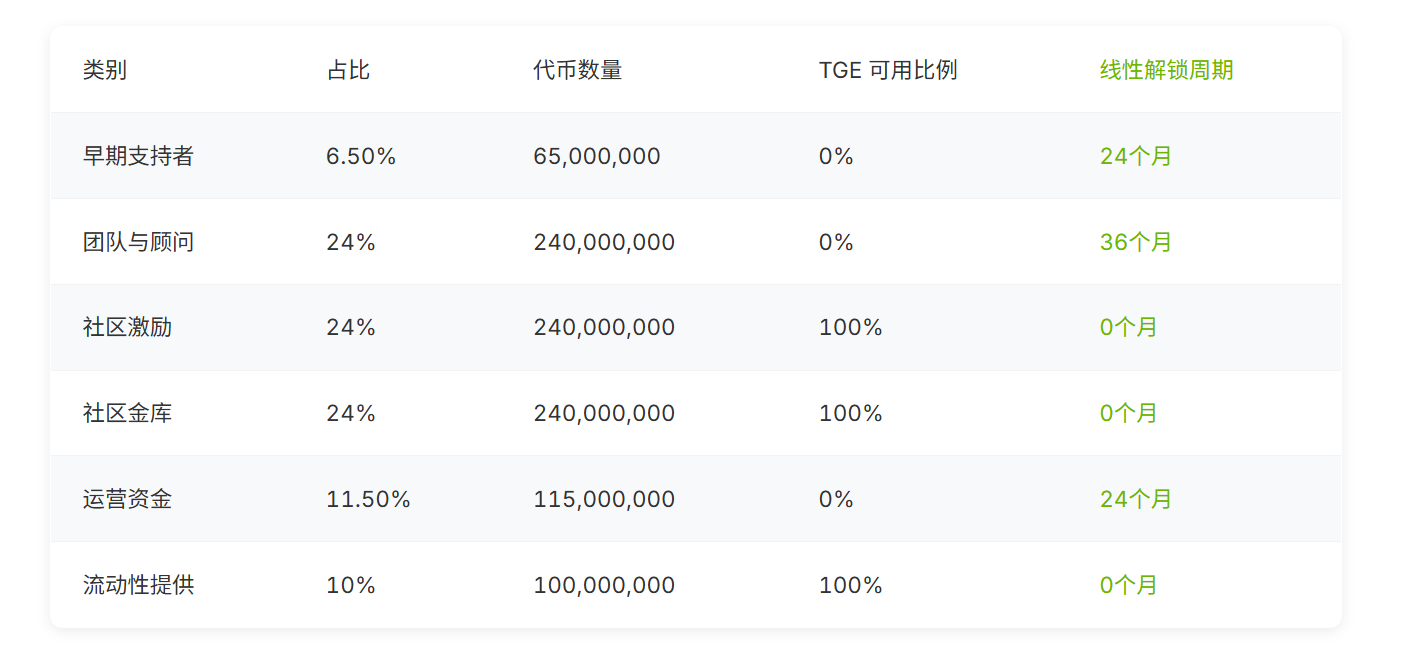
Only tokens allocated to the community and community support purposes will be unlocked at TGE. The remaining allocations will be locked for at least 24 months and released gradually during that period.


Token Utility
Network Fees: Acurast operates on a Proof-of-Stake (PoS) blockchain, serving as the coordination and settlement layer for the decentralized computing economy. Users need to pay transaction fees in ACU when interacting with the network.
Staking: While the network's computing itself is designed for security, participating in staking through Processor nodes adds an extra layer of economic security. Stakers providing economic security for the network receive fee rewards. All ACU holders can participate in staking through delegation without needing to run their own Processor nodes.
Settlement: ACU is the unified token for computing settlement, used to measure the reputation and quality of computing services. For each settlement, 30% of the tokens are burned to prevent manipulation of reputation scores. This mechanism is abstracted and transparent to users, meaning any token can be used to pay for decentralized computing services on Acurast, with ACU serving as the underlying settlement layer.
Governance: ACU holders can participate in on-chain governance, voting on community proposals to drive iterative upgrades of the protocol and its components, achieving true decentralization and long-term sustainable evolution.
Inflation Mechanism Inflation is used to reward active participation in the network, ensuring the protocol continues to operate in a decentralized manner over the long term. The protocol's annual inflation rate is set between 1% and 5%, dynamically adjusted based on on-chain metrics and subject to further modification through governance.
How to Buy $ACU|Participation Guide
ACU is now available for purchase in the XT Pre-Market ACU zone, offering an opportunity for users who wish to participate in the ecosystem ahead of the mainnet launch. By acquiring tokens through the pre-market, users can engage with the expanding Acurast ecosystem and become part of the network's early foundational community.

In addition to purchasing $ACU, users can explore various ways to participate in the Acurast ecosystem. From contributing computing power via devices to staking ACU for network rewards, the platform offers multiple incentive channels, allowing users to earn rewards while actively engaging with the community. Staying updated on ecosystem developments also enables users to discover new opportunities, including participating in governance, executing tasks, and future integrations and applications within the decentralized network.
Competitive Advantages of the ACU Token
Acurast's competitive advantage lies in its ability to combine decentralized infrastructure, verifiable computing, and a community-centric token economy. Unlike traditional cloud services, Acurast leverages billions of idle smartphones to build a secure, scalable, and cost-effective computing network without relying on centralized data centers.
The ACU token further strengthens the ecosystem by aligning incentives for developers, computing resource providers, and end-users. Through staking, task rewards, and governance participation, ACU encourages sustained activity and reliability while safeguarding network integrity. The tokenomics design prioritizes community involvement, with nearly 70% of tokens allocated to the community and community support initiatives, ensuring decentralization is not just theoretical but practically executed. Combined with adaptive inflation, secure settlement mechanisms, and reputation-based rewards, ACU emerges as a robust utility and governance token driving a real-world decentralized computing economy—creating a network effect: more participants bring more computing power, more computing power attracts more developers, and more developers ultimately create more value for the ecosystem.
Key Risks and Challenges for the ACU Token
While ACU offers a unique opportunity to participate